How to Improve Your Surf Balance at Home: 5 Simple Routines That Actually Help
I started looking for better ways to keep my surf rhythm on flat days, which is how I ended up trying surf balance board training at home. It surprised me how quickly the small stabiliser muscles woke up, even during slow warm ups in the living room.
If you want something that brings you closer to the feeling of reading a wave, this is it. A balance board gives you tiny shifts, little surprises, that force your legs and core to work the same way they do when you paddle into something steep. Parents tell us their kids love it too, which makes training feel a bit less like training.
Let’s get you started.
Why Surf Balance Board Training Helps Your Timing
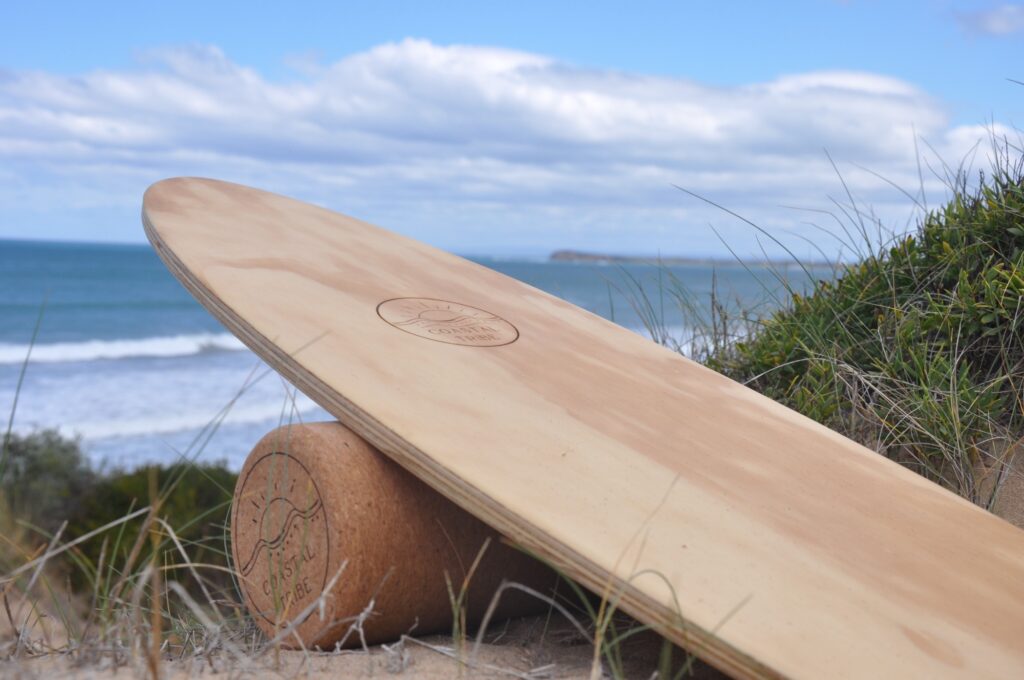
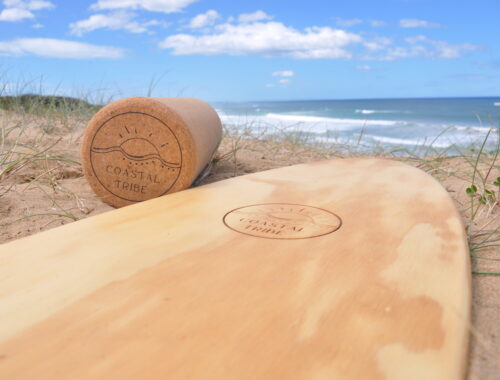
The idea is simple. You stand on a wooden deck that rests on a roller. As soon as you step onto it, every muscle that keeps you upright wakes up. The small ones around your ankles and knees. The deeper core muscles you forget about until they burn. Even your posture changes.
A few studies out there point to better coordination and faster reaction times when people train with unstable surfaces. You do not need to read all the science to feel it. Give it two minutes and your body tells you everything.
If you can ride a board at home, the transition back to the water becomes smoother. Popping up feels quicker. Turns feel tighter. Your legs stop shaking on bigger days.
Routine 1: The Five Minute Warm Up
This warm up is one of the easiest ways to start surf balance board training at home without overwhelming beginners. I kept this one simple because it is the routine I use when I have exactly zero motivation.
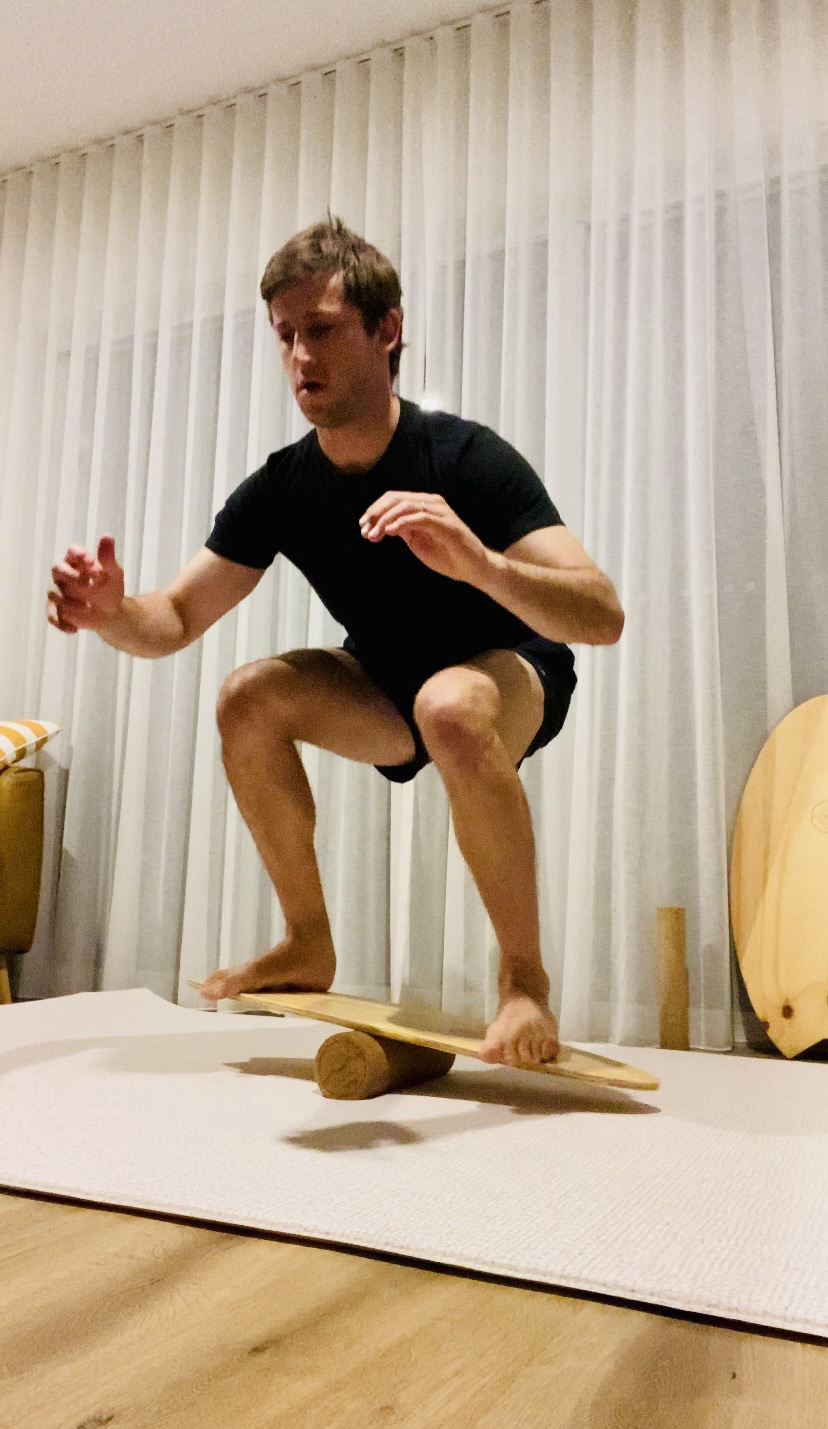
Step onto the board with a soft bend in your knees. Rock from heel to toe for about twenty seconds. Then move side to side. Keep it slow. Do a few shallow squats. Maybe touch the deck with one hand if you are steady enough. By the third minute you will feel your hips loosen up. Kids pick this up instantly, often better than adults.
If you only do one routine from this article, pick this one.
This warm up works well on both The Shredder and The Moonah.
Routine 2: Stronger Turns With Lower Body Work
Surfers who want sharper turns usually need more strength through their legs and hips. The board helps with that in a very real way.
Stand sideways like you would on your surfboard. Hold the rail of a chair if you need support for the first few sessions. Move into a slow squat and rise back up. Focus on staying centred. Do ten of these and your legs will wake up fast. This routine is great for teens and adults who want to push their surfing further.
If your board sits on a larger roller, you will notice your stabilisers switch on twice as fast.
Routine 3: The Family Challenge
This one came out of a rainy afternoon when my daughter wouldn’t get off the board. We set up a little challenge that turned into half an hour of chaos.
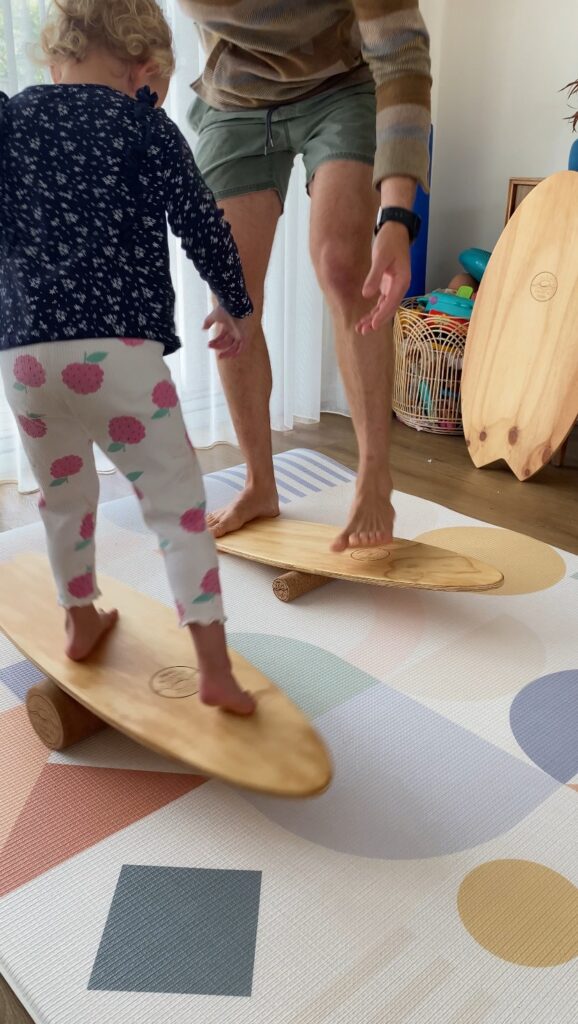
Pick three moves. Maybe a squat, a slow turn, and a two second hold on one foot. Run around a chair or up the hallway and back. Each person has to complete all movements. Track how long it takes for little kids – they’ll love it. Kids get surprisingly competitive, and adults pretend they do not care until it is their turn.
This is where your balance board stops being gear and becomes a bit of family entertainment.
Routine 4: A Simple Move That Helps On Bigger Days
People who want sharper reactions on bigger days often add a few minutes of surf balance board training at home to their weekly routine. When the waves feel punchier, you need quicker reactions. This drill trains that without feeling too serious.
Stand on the board with your knees slightly bent. Have someone roll a small ball toward you from different angles. Your job is to catch it while staying upright. It sounds silly. Then you try it and realise how fast your body has to move.
If you are training solo, toss the ball against a wall and catch it on the rebound.
If you are curious why we build these boards, check out our story on the About Us page.
Routine 5: The Core Builder
Your pop up is faster when your core can hold shape without shaking. This is the routine for that.
Lie beside the board and place one forearm on the deck. Lift into a side plank. Keep your body straight. The board will wobble and force everything around your ribs and hips to fire. Hold it for fifteen seconds. Rest. Repeat twice. Switch sides.
Most people underestimate this one until they try it.
Picking The Right Board For Your Home
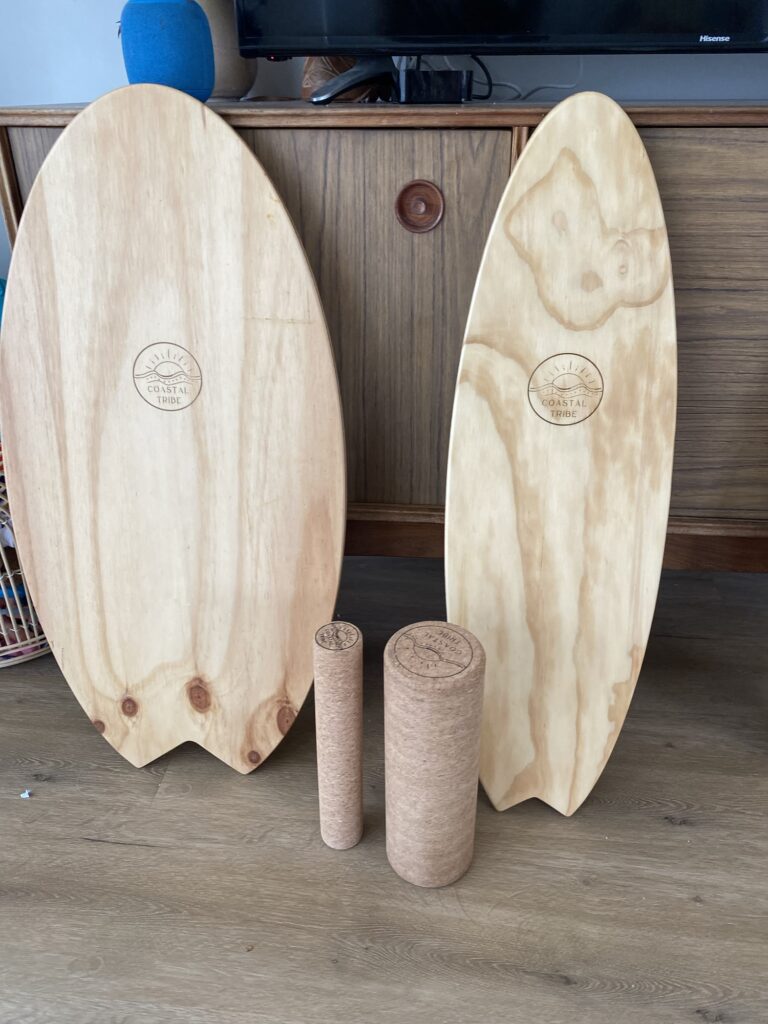
Not every board feels the same. A timber board has a solid base for learning and looks aesthetically great in any space at home. A roller under the board gives you more range and a real challenge for adults who surf often. Wooden boards tend to feel better underfoot, and they last far longer than the cheaper plastic options.
If you want an all rounder, The Moonah is solid for families. If you want something that mimics the feel of loading up your turns, The Shredder is a sharp little tool.
Why A Handcrafted Wooden Board Makes A Difference
We build ours the slow way. Timber cut cleanly, edges softened by hand, finishes that feel good against skin. Families use them barefoot, so the texture matters. They have to survive kids dropping them in the hallway. They also need the right weight, so the board feels grounded but still lively.
A lot of people think they will only use a board for training. Then it ends up in the living room because the kids use it as often as the adults.
If You Want To Start Now
Pick one of the routines. Keep it short. Do it three or four days in a row. You will feel the difference quicker than you think. And if you want a board that fits both you and the kids, check out our reviews for The Moonah or The Shredder on our shop page.
When the swell is flat, your living room becomes your break. That small habit carries through when the waves return.